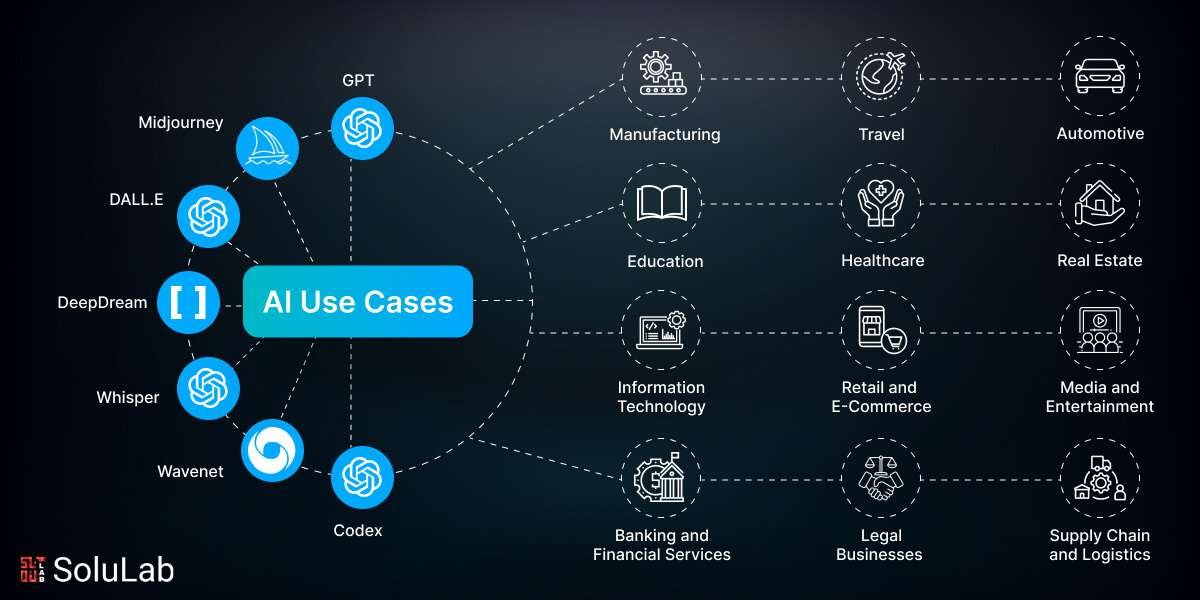
Forget the dystopian science fiction or the breathless hype. Artificial Intelligence, particularly in its most practical incarnations like AI agents, isn't just a future concept—it's actively reshaping how businesses operate, innovate, and thrive today. From automating the mundane to unlocking unprecedented insights, the practical applications & use cases of AI are no longer a luxury but a strategic imperative for any organization aiming for efficiency, growth, and a competitive edge.
Ready to cut through the noise and understand where AI truly makes an impact? Let's dive into the tangible ways AI is being put to work right now.
At a Glance: What You'll Discover
- AI Agents Explained: Understand these new-generation software assistants and what sets them apart.
- Industry-Specific Impact: See real-world examples of AI agents transforming healthcare, HR, manufacturing, finance, and customer support.
- Beyond Agents: Explore a wider spectrum of AI applications across generative AI, key business functions, and diverse industries.
- Strategic Implementation: Learn how organizations are integrating AI, from no-code solutions to building in-house expertise.
- Future-Proofing Your Business: Gain insights into how to ethically and effectively leverage AI for sustained growth.
The Dawn of AI Agents: More Than Just Smart Chatbots
For years, "AI assistant" might have conjured images of simple, rule-based chatbots. Today, a new breed of software is emerging: AI agents. Powered by sophisticated Large Language Models (LLMs), these agents represent a quantum leap. Unlike their predecessors, which largely followed predetermined scripts or keyword triggers, AI agents can understand natural language, interpret complex requests, and execute multi-step workflows autonomously.
Think of them as proactive, digital colleagues. They don't just answer questions; they can access information across various tools, analyze context, and even operate overnight to automate repetitive tasks, reduce errors, streamline processes, and significantly enhance productivity. By augmenting LLM training data with specific business documents and context, AI agents become hyper-relevant to your organization's unique needs, evolving from mere helpers to indispensable team members.
AI Agents in Action: Industry-Specific Revolutions
The beauty of AI agents lies in their versatility. They're not confined to a single department; instead, they're being tailored to solve specific, high-impact problems across a multitude of sectors.
Healthcare: Enhancing Care and Accelerating Discovery
In healthcare, the stakes are incredibly high. AI agents are stepping in to support clinicians, streamline administrative tasks, and even accelerate life-saving research, freeing up human professionals to focus on patient interaction and complex decision-making.
- Clinical Assistants: Imagine a physician asking for a patient's full history via voice command during an exam, with an AI agent instantly retrieving and summarizing relevant data, even drafting clinical notes in real-time. This reduces administrative burden and improves diagnostic accuracy.
- Disease Identification Assistance: AI agents can compare current clinical notes with vast historical data, flagging potential diagnoses or patterns that might otherwise be missed, leading to earlier intervention.
- Automated Appointment Scheduling: From patient registration to bill creation, AI agents handle the repetitive logistics, ensuring smooth operations and reducing wait times.
- Accelerated Drug Discovery: Research is a monumental task. AI agents can rapidly read through millions of scientific publications and meticulously examine molecular structures, drastically expediting the process of identifying potential new medicines.
Human Resources: Empowering Employees, Streamlining Operations
HR departments often juggle a complex mix of administrative tasks, employee support, and strategic initiatives. AI agents are proving invaluable in automating routine processes, allowing HR professionals to focus on talent development and employee well-being.
- Streamlined Job Posting: AI can generate detailed job listings, complete with responsibilities, experience requirements, and qualifications, all aligned with internal hiring policies.
- Automated Interview Scheduling: Say goodbye to endless email chains. AI agents can automatically arrange meetings with candidates, coordinate calendars, and send timely follow-up emails.
- Seamless Employee Onboarding: From assisting with form completion and training modules to setting up accounts and devices, AI agents make the onboarding process smooth and efficient for new hires.
- Personalized Benefits Explanations: Employees often have questions about benefits. AI agents can provide instant, accurate information on paid time off, retirement savings, healthcare plans, and family leave.
- Proactive Employee Retention: By analyzing salary benchmarks, tenure data, skill sets, and performance reviews, AI agents can predict turnover risks and identify growth opportunities, helping organizations retain their top talent. For those looking to optimize their internal processes, understanding developing a robust AI strategy can be a game-changer.
Manufacturing: Boosting Efficiency and Resilience
The manufacturing sector is increasingly leveraging AI for everything from predictive maintenance to optimizing complex supply chains, enhancing both efficiency and resilience.
- Accurate Maintenance Estimates: AI agents can analyze photos of damaged equipment, quickly estimate repair needs, and suggest optimal repair options, minimizing downtime.
- Optimized Delivery Logistics: Using real-time data, AI plans the most efficient shipping routes, leading to faster deliveries, reduced costs, and a significant cut in carbon emissions.
- Empowered Sales Representatives: AI agents can instantly supply sales reps with current pricing policies and product updates, enabling them to craft compelling and profitable offers.
- Proactive Supply Chain Risk Assessment: By analyzing vast datasets—including supplier performance, product inventory, and external factors like weather, labor, and trade policies—AI can mitigate disruptions before they occur, ensuring smoother operations.
Finance: Fortifying Security and Sharpening Decisions
In finance, precision, compliance, and security are paramount. AI agents are revolutionizing how financial institutions manage risk, detect fraud, and make investment decisions.
- Automated Know Your Customer (KYC) Processes: AI automates identity verification and risk scoring, replacing manual, rules-driven workflows with sophisticated cross-system customer assessments. This is a critical step in best practices in data governance for AI.
- Advanced Anti–Money Laundering (AML) and Fraud Detection: AI continuously monitors transactions for suspicious activity, identifying patterns indicative of fraud or illicit financial flows in real-time.
- Sophisticated Automated Trading: By analyzing market fundamentals, price movements, trading volumes, and risk parameters, AI agents can inform and execute complex securities trading strategies with speed and accuracy.
- Intelligent Credit Underwriting: AI gathers comprehensive data, computes financial ratios, models outcomes against risk tolerance, and even drafts credit memos, accelerating the loan approval process while maintaining due diligence.
Customer Support: Delivering Faster, Smarter Service
Customer support is often the frontline of any business, and AI agents are transforming it into a proactive, highly efficient operation that delights customers and reduces agent workload.
- Intelligent Ticket Triage and Routing: AI classifies incoming requests, gauges customer sentiment, automates responses to common queries, and escalates complex issues to the appropriate human agent.
- Expedited Returns Processing: AI agents can verify return policies, generate return orders, and send confirmation details to customers, speeding up a typically cumbersome process.
- Seamless Order Delivery Tracking: Automatically answer status inquiries, schedule deliveries, and even suggest optimal routes for logistics, enhancing the customer experience.
- Proactive Resolution Recommendations: For technical or product setup issues, AI can suggest solutions to customers, potentially reducing the need for direct call center intervention and improving first-contact resolution rates.
Beyond Agents: Broader AI Applications Transforming Business
While AI agents are a powerful and specific subset, the broader landscape of AI applications is vast and ever-expanding. From generating creative content to securing digital assets, AI is empowering organizations across every conceivable function and industry.
Generative AI: The Power to Create
Perhaps one of the most exciting recent developments, generative AI focuses on producing novel output where no single "correct" answer exists. This capability has opened up entirely new avenues for creativity and efficiency.
- Content Creation: Marketing teams are using generative AI to draft blog posts, social media updates, email campaigns, and product descriptions, accelerating content pipelines.
- Software Code Generation: Developers are leveraging AI to generate code snippets, complete functions, and even entire applications, speeding up development cycles and reducing errors.
- User Interface (UI) Design: AI can propose various UI layouts, color schemes, and component placements, helping designers rapidly iterate and test concepts.
- Art and Media Production: From image generation to music composition, generative AI is a potent tool for artists and creators.
AI in Key Business Functions
Every department stands to benefit from AI. Here's a look at how core business functions are being augmented.
Analytics: Unlocking Deep Insights
AI enhances data analysis beyond traditional methods, finding patterns and making predictions that humans might miss.
- Advanced Analytics Platforms: From E-commerce to geo-analytics and real-time operational insights, AI powers platforms that deliver deeper understanding.
- Conversational & Visual Analytics: AI can interpret natural language queries for data, and recognize patterns in images or video for insights.
- Automated Machine Learning (AutoML): This streamlines the process of building, training, and optimizing machine learning models, making sophisticated analytics accessible to more users.
Cybersecurity: A Shield Against Threats
AI's ability to process massive amounts of data and detect anomalies makes it an invaluable asset in the fight against cyber threats.
- Data Loss Prevention (DLP): AI identifies and protects sensitive data, preventing breaches.
- Intelligent Access Control: AI learns user behavior to detect unusual access patterns, enhancing security.
- Network Monitoring: AI continuously monitors networks for anomalies, identifying and responding to threats in real-time.
- Autonomous Cybersecurity Systems: These systems can detect, analyze, and neutralize threats with minimal human intervention.
Data Management: The Backbone of AI
AI itself relies on robust data, and ironically, AI is also crucial for managing that data effectively.
- Data Cleaning and Validation: AI automates the identification and correction of errors in datasets.
- Data Integration and Management: AI can intelligently integrate disparate data sources.
- Synthetic Data Generation: For testing and privacy, AI can create artificial datasets that mimic real-world data without compromising sensitive information.
Energy: Optimizing Resources and Sustainability
AI is vital for managing complex energy grids, forecasting demand, and driving sustainability efforts.
- Smart Grid Optimization: AI balances supply and demand, reducing waste and improving reliability.
- Renewable Energy Forecasting: AI predicts energy generation from solar and wind, optimizing grid integration.
- Predictive Maintenance: AI predicts failures in energy infrastructure, preventing costly outages.
- Fusion Reactor Design: AI is even being used to optimize designs for advanced energy sources.
Marketing: Personalization and Precision
AI allows marketers to understand customer behavior at an unprecedented level, leading to highly personalized and effective campaigns.
- Marketing Analytics: AI processes vast amounts of customer data to identify trends and campaign effectiveness.
- Personalized Marketing: AI delivers tailored content, product recommendations, and offers to individual customers.
- Context-Aware Marketing: AI adapts marketing messages based on a customer's real-time context, such as location or recent interactions.
Operations: Efficiency on an Industrial Scale
From the factory floor to the warehouse, AI is transforming operational efficiency.
- Cognitive/Intelligent Automation: Combining Robotic Process Automation (RPA) with AI for smarter, more adaptable automation.
- Process Mining: AI analyzes event logs to discover, monitor, and improve real processes.
- Predictive Maintenance: AI predicts equipment failures before they happen, minimizing downtime and maintenance costs.
- Inventory and Supply Chain Optimization: AI optimizes stock levels, routes, and logistics for maximum efficiency and resilience, just as a reliable tool like the Ryobi 2300 generator provides robust power for demanding tasks, AI offers a new kind of power for your business operations.
Sales: Driving Revenue and Customer Engagement
AI empowers sales teams with insights and automation, leading to increased conversions and stronger customer relationships.
- Sales Forecasting: AI provides highly accurate predictions of future sales performance.
- Lead Generation & Scoring: AI identifies promising leads and scores them based on likelihood to convert.
- Sales Content Personalization: AI helps tailor sales materials to individual client needs.
- AI-Based Agent Coaching: AI suggests responses and next actions for sales reps, improving their effectiveness.
Strategy & Legal: Informed Decisions and Reduced Risk
Even high-level strategic functions are benefiting from AI's analytical and generative capabilities.
- Presentation Preparation: Generative AI can assist in drafting compelling presentations.
- Contract Drafting and Review: AI can quickly analyze and generate legal documents, flagging discrepancies.
- Legal Research: AI rapidly sifts through vast legal databases, identifying relevant cases and statutes.
- Intellectual Property (IP) Protection: AI can help monitor for potential IP infringements.
Tech: Fueling Innovation and Development
The tech industry itself is a major consumer and producer of AI tools, constantly pushing the boundaries of what's possible.
- No-Code AI & App Development: Tools that make AI accessible to non-developers.
- Developer Assistance: AI helps write code, debug, and optimize software.
- Knowledge Management: AI organizes and makes internal knowledge easily searchable and actionable.
- AI Consultancy: Experts guiding businesses through AI adoption and implementation.
AI Across Diverse Industries
Beyond specific functions, entire industries are being reshaped by AI innovation.
- Automotive & Autonomous Things: From advanced driving assistants and vehicle cybersecurity to vision systems and fully self-driving cars, AI is at the core of the future of transportation.
- Education: AI is transforming learning through personalized course creation, intelligent tutoring systems, and adaptive learning platforms.
- Fashion: AI aids in creative design, enables virtual try-on experiences, and analyzes trends to predict consumer demand.
- FinTech: Beyond fraud detection and automated trading, AI powers insurance (InsurTech), financial analytics platforms, credit lending/scoring, robo-advisory services, and conversational banking.
- HealthTech: AI drives personalized medications, real-time patient prioritization, early diagnosis, medical imaging insights, and gene analytics, revolutionizing patient care.
- Manufacturing: In addition to operational efficiencies, AI enables collaborative robots (cobots) and advanced robotics for physical process automation.
- Non-Profits: AI assists in personalized donor outreach, engagement strategies, and identifying potential donors, helping organizations maximize their impact.
- Retail: From cashierless checkout systems to predictive inventory management, AI is creating seamless and efficient retail experiences.
- Telecom: AI optimizes network investment based on Quality of Service (QoS), improving infrastructure and customer experience.
Strategic Implementation: From Concept to ROI
Embracing AI isn't just about picking a cool tool; it's about strategic integration that delivers measurable value. Companies are approaching this in several ways, but success always hinges on thoughtful planning and execution.
Getting Started: Pathways to AI Adoption
Organizations don't need to reinvent the wheel to leverage AI. Various pathways exist to suit different levels of expertise and resource availability.
- High-Impact, No-Code Solutions: For rapid value generation, starting with high-impact applications using no-code AI solutions is often the best first step. These platforms allow business users to configure AI agents or models without deep programming knowledge.
- Leveraging AutoML Software: For more complex machine learning projects, automated machine learning (AutoML) software can significantly simplify model development, optimization, and deployment.
- In-House Development: Companies with strong technical teams might choose to develop custom AI solutions, offering maximum control and customization.
- Partnerships and Expert Consultation: Collaborating with AI experts or specialized firms can provide access to cutting-edge technology and deep domain knowledge.
- Utilizing Pre-trained Models: Many sophisticated AI models are available pre-trained, offering a faster route to deployment for common tasks.
- Platform-Specific Solutions: Products like Oracle AI Agent Studio for Fusion Applications offer prebuilt templates, allowing businesses to customize autonomous agents seamlessly within their existing cloud applications, often included at no extra cost. This kind of integration makes it easier to focus on effectively measuring the impact of AI initiatives.
Key Considerations for Success
Implementing AI effectively goes beyond just the technology itself. It requires a holistic approach.
- Align AI with Specific Business Goals: Don't deploy AI for AI's sake. Identify clear problems or opportunities where AI can provide a tangible advantage. What specific tasks can AI agents automate to free up human time? Where can AI analytics uncover hidden revenue streams or cost savings?
- Ensure Ethical Data Use and Privacy: AI is only as good as its data. Establishing robust best practices in data governance for AI is paramount. This includes ensuring data quality, security, and strict adherence to privacy regulations. Developing building responsible AI frameworks is not just good practice, it's essential for trust and long-term success.
- Invest in Infrastructure and Talent: AI solutions require appropriate computational infrastructure and skilled talent, both for deployment and ongoing management. This also includes upskilling your workforce for the AI era to collaborate effectively with AI systems.
- Embrace Iteration and Testing: AI models, especially agents, will continuously learn and improve. Establish rigorous testing procedures with quantitative effectiveness measures to refine their performance over time.
- Focus on Human-AI Collaboration: The goal isn't to replace humans entirely, but to augment human capabilities. AI agents excel at repetitive, data-intensive tasks, allowing human employees to focus on creativity, critical thinking, and complex problem-solving. This collaboration is central to how AI is reshaping the future of work.
The Future is Autonomous: Your Next Steps
The trajectory for AI, especially AI agents, points towards increasing autonomy in routine processes. Expect to see advancements in inter-agent communication protocols, allowing different AI agents to collaborate on more complex workflows seamlessly. Testing methodologies will become more sophisticated, ensuring higher levels of reliability and trust.
For businesses, the message is clear: the time to engage with practical AI applications is now. Start with manageable, high-impact projects. Leverage no-code tools and pre-built solutions where possible. Foster a culture that understands and embraces AI as a powerful partner, not a competitor. By aligning AI tools with specific strategic goals, ensuring ethical data use, and investing in both technology and talent, you can unlock unprecedented efficiencies, drive innovation, and truly future-proof your organization. Begin exploring your first steps with AI today.